Commercial Floor Care Tips For Your Fast Food Restaurant
Commercial Floor Care Tips For Your Fast Food Restaurant
Fast food restaurants experience some of the highest levels of daily foot traffic in the food service industry. From employees constantly moving between prep stations to customers coming in throughout the day, restaurant floors are exposed to grease, spills, dirt, and moisture. Without proper maintenance, flooring can quickly become unsafe, unsanitary, and worn out. Implementing a consistent commercial floor care routine helps maintain cleanliness, improve safety, and extend the life of your flooring.
For restaurant owners and managers throughout the Dallas–Fort Worth area, proper floor care is not just about appearance. It is also critical for meeting health standards and protecting employees and customers from slip and fall hazards. In effect, there are many important benefits of proper restaurant cleaning in particular when pertaining to floor care and maintenance.
PRO TIP: Learn more about commercial, office and industrial cleaning in Texas or contact CleanNet of Dallas Fort Worth here.
Why Floor Care Is Especially Important in Fast Food Restaurants
Fast food environments create unique challenges for flooring. Cooking oils, drink spills, food debris, and constant traffic create conditions that can damage floors if they are not maintained properly.
Maintaining your floors regularly helps:
- Prevent slips and accidents
- Maintain sanitation standards
- Protect your flooring investment
- Improve the overall appearance of your restaurant
- Reduce long-term repair and replacement costs
Clean floors also contribute to a better customer experience. Guests notice when a restaurant looks well maintained, and clean floors play a large role in the overall perception of cleanliness.
Choose the Right Flooring Materials
If you are opening a new restaurant or renovating an existing one, choosing durable commercial flooring is the first step toward easier maintenance. Fast food restaurants typically use materials designed to handle moisture, grease, and heavy traffic.
Common flooring materials include:
- Commercial tile
- Sealed concrete
- Quarry tile
- Commercial vinyl composition tile (VCT)
- Epoxy-coated flooring
Each of these surfaces requires specific cleaning and maintenance techniques. Understanding the needs of your flooring type will help you create an effective cleaning schedule.
Create a Daily Cleaning Routine
Daily cleaning is the foundation of effective restaurant floor care. High traffic areas like ordering counters, kitchen prep areas, and dining spaces accumulate debris throughout the day.
A daily routine should include sweeping and mopping multiple times during operating hours. Sweeping removes loose debris such as crumbs and dirt, while mopping helps eliminate grease and sticky residue.
Using commercial-grade degreasing cleaners is particularly important in kitchen areas where cooking oils frequently reach the floor.
Employees should also spot clean spills immediately to prevent stains and slippery conditions.
Use Slip-Resistant Cleaning Products
Fast food restaurant floors are often exposed to liquids, making slip resistance extremely important. Using the right cleaning products can help maintain traction on the floor surface.
Avoid overly glossy cleaners that leave slippery residue. Instead, choose commercial floor cleaners designed specifically for restaurant environments. Many professional cleaning products are formulated to break down grease while maintaining safe traction levels.
Maintaining slip-resistant floors protects your staff and customers while reducing the risk of liability.
Pay Special Attention to Kitchen Floors
Kitchen areas require the most aggressive floor care because they deal with grease, oil, and constant moisture.
Grease buildup can quickly create dangerous conditions if not removed regularly. Deep cleaning kitchen floors should include degreasing treatments that break down oils embedded in grout lines and floor surfaces.
In many fast food restaurants, kitchen floors should be professionally scrubbed or pressure cleaned on a regular basis to remove buildup that standard mopping cannot eliminate.
Maintain Grout and Tile Lines
Tile flooring is common in fast food kitchens because of its durability and slip resistance. However, grout lines can easily trap grease, food particles, and bacteria.
Without proper cleaning, grout can discolor and develop unpleasant odors.
Regular grout cleaning using commercial equipment helps remove deeply embedded debris. Professional tile and grout cleaning services can restore the appearance of flooring while improving sanitation.
Keeping grout clean is essential for meeting health inspection standards.
Implement Scheduled Floor Scrubbing
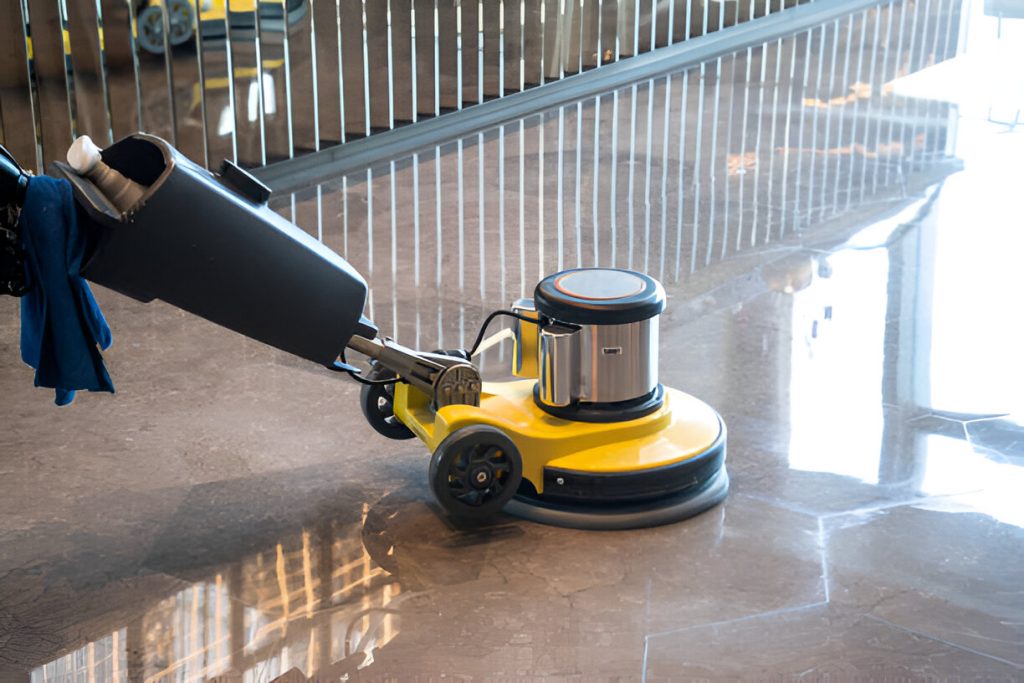
Even with consistent daily cleaning, floors require deeper maintenance over time. Commercial floor scrubbers are designed to remove embedded dirt, grease, and residue that mopping alone cannot handle.
Automated floor scrubbing equipment uses rotating brushes and powerful suction to lift grime from flooring surfaces.
For busy restaurants, floor scrubbing may be necessary weekly or biweekly depending on traffic levels and kitchen activity.
Professional janitorial services often provide scheduled floor scrubbing as part of a comprehensive cleaning program.
Protect Entryways and High-Traffic Areas
Entrance areas collect large amounts of dirt, moisture, and debris from outside. Without proper protection, this debris gets tracked throughout the restaurant.
Installing heavy-duty commercial entrance mats helps capture dirt and water before it spreads across your floors.
Mats should be cleaned or replaced regularly to maintain effectiveness. This simple step significantly reduces wear on flooring surfaces and keeps dining areas cleaner.
Schedule Professional Floor Maintenance
Over time, commercial floors benefit from professional maintenance services that go beyond routine cleaning. These services help restore flooring surfaces and extend their lifespan.
Professional floor care services may include:
- Machine scrubbing
- Floor stripping and waxing
- Tile and grout restoration
- Carpet extraction in dining areas
- Pressure washing for exterior entryways
Professional maintenance removes buildup that standard cleaning cannot address and helps maintain a polished, professional appearance.
Train Employees on Proper Cleaning Practices
Employees play an important role in maintaining restaurant floors. Staff members should be trained on proper cleaning procedures, including the correct use of cleaning products and equipment.
Training should include:
- Immediate spill cleanup
- Safe mopping techniques
- Proper dilution of cleaning chemicals
- Routine sweeping during shifts
- Reporting damaged flooring or hazards
When employees understand the importance of floor care, they are more likely to maintain a clean and safe environment throughout the day.
Keep Your Restaurant Safe, Clean, and Professional
Floor care is one of the most important components of maintaining a clean and safe fast food restaurant. Consistent cleaning routines, proper products, and scheduled professional maintenance help protect both your customers and employees while preserving the life of your flooring.
For restaurants across the Dallas–Fort Worth area, working with an experienced commercial cleaning provider can make floor maintenance far more manageable.
CleanNet of Dallas Fort Worth provides professional janitorial and commercial floor care services for restaurants, offices, and commercial facilities throughout the region. Businesses looking to maintain safe, sanitary, and professional environments can rely on CleanNet’s experienced cleaning teams for dependable service. CleanNet of Dallas Fort Worth is located at 800 W Airport Fwy # 720, Irving, TX 75062, United States.
The post Commercial Floor Care Tips For Your Fast Food Restaurant appeared first on CleanNet of Dallas Fort Worth.
Article Source : cleannettexas.com/commercia...
